I cannot remember the model of our old BMW, but I remember the silence.
Leonard Dembo had accompanied us to the National Sports Stadium; on the journey home, the music was silent, and the air between my father and me was tense.
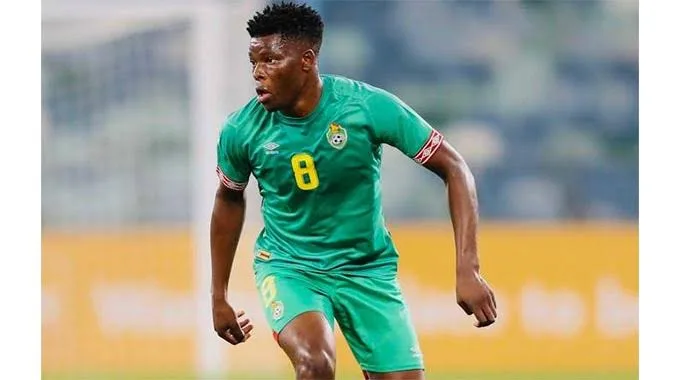
This afternoon, as Zimbabwe hosts Equatorial Guinea at 3 p.m., I think of that car, and the hopes supporters carry through the stadium gates.
There is a reason Warriors fans joke that a match ticket should come with painkillers and something for the nerves.
My late father was a staunch Warriors supporter, the man who made me fall in love with Dynamos and helped give football its place in my life.
The giant stadium could make that love feel wonderfully easy.
On Aug. 16, 1992, I watched Zimbabwe demolish South Africa 4-1, Peter Ndlovu scoring twice as the roar rolled around the ground.
Every forward surge seemed to lift the stands; as a boy, I felt we could take on anyone.
Reinhard Fabisch had assembled a team worth believing in: Coventry City’s Peter, Liverpool’s Bruce Grobbelaar, Highlanders’ Adam Ndlovu, and scorers Vitalis Takawira and Rahman Gumbo.
Then came July 25, 1993, and the afternoon that ended in that silent BMW.
Zimbabwe needed to beat Zambia to reach their first AFCON finals, in Tunisia the following year; a draw would send the visitors through.
Henry McKop gave us the lead, but Kalusha Bwalya headed home a free-kick in the 80th minute.
Zambia, rebuilt after April’s air disaster, had secured a remarkable qualification; our unbeaten campaign ended one point short.
I remember the anger after the final whistle, the swearing, the disbelief.
My father was devastated.
I sat in the passenger seat beside a man whose faith in the Warriors had carried us there, feeling the weight of his disappointment all the way home.
He had given me his teams; that day, I began to understand how much of himself he had invested in them.
Years later, on July 9, 2000, I was back when the stadium witnessed a loss that football could never repair.
During a 2002 World Cup qualifier, Delron Buckley scored South Africa’s second goal; police subsequently fired tear gas into the stands, triggering the stampede that killed 13 supporters.
Their families were left with an absence that no future victory could fill.
Every return to this ground should honour their memory through the simple promise that everyone who comes for football gets home safely.
In later campaigns, the familiar doubts about our football returned: Guinea won here 1-0 in World Cup qualifying on June 3, 2012; Tanzania’s 2-2 draw on June 1, 2014, eliminated Zimbabwe from the 2015 AFCON qualifiers, 3-2 on aggregate.
September’s return to the renovated stadium brought another home defeat, 2-1 against DR Congo.
Today offers a chance to begin giving this restored home a more formidable reputation.
Equatorial Guinea will require a convincing performance: fourth at AFCON in 2015, quarterfinalists in 2012 and 2021, they have made bigger names uncomfortable despite never reaching a men’s World Cup.
Javier Balboa’s two goals against Tunisia drove their 2015 semifinal breakthrough; Emilio Nsue won the 2023 edition’s Golden Boot with five goals as his country also thrashed hosts Ivory Coast 4-0.
With Torino’s Saúl Coco and Sparta Prague’s Santiago Eneme among today’s threats, their reputation has substance.
Thursday’s goalless draw in Yaoundé, protected by Nelson Chadya’s saves and Marshall Munetsi’s clearance off the line, showed Zimbabwe how demanding this contest can be.
Now both sides have four points, and victory would put the Warriors three ahead of their visitors with two qualifiers remaining.
Qualification would remain unfinished business, but Zimbabwe would have made a direct rival’s route considerably harder.
Winning that advantage will require the courage and organisation their name promises.
Our name carries a demanding inheritance: the Old Northern French roots of warrior describe a fighter.
Shaka built Zulu power through military organisation, while Boudicca rallied resistance to Roman rule in Britain.
The footballing expression of that spirit is a team that demands possession, contests every ball and stays disciplined under pressure.
Repeated often enough, those performances make a ground feared.
Ghana went 24 years unbeaten at Baba Yara before Angola won there in 2024; Algeria went 43 matches unbeaten at Mustapha Tchaker before Cameroon broke the sequence in 2022.
That is the reputation Zimbabwe should build, one home match at a time.
Teams should enter our 60,000-seater stadium with fear trembling, knowing they have to be at their best to win.
The national sports stadium should be a fortress, a den of lions where, once you enter, you will definitely leave lifeless.
My father is gone now, but the love of football he left me remains.
So does the boy who once sat beside him in that BMW, still hoping the next match will give us something worth celebrating.
This afternoon, give another father and child a happier memory.
Let the music play all the way home.
Go Warriors, go!!!!