The Zimbabwe Human Rights Commission has urged the government to accept ZiG payments for passports, warning that foreign-currency-only charges create an additional barrier for citizens earning in local currency.
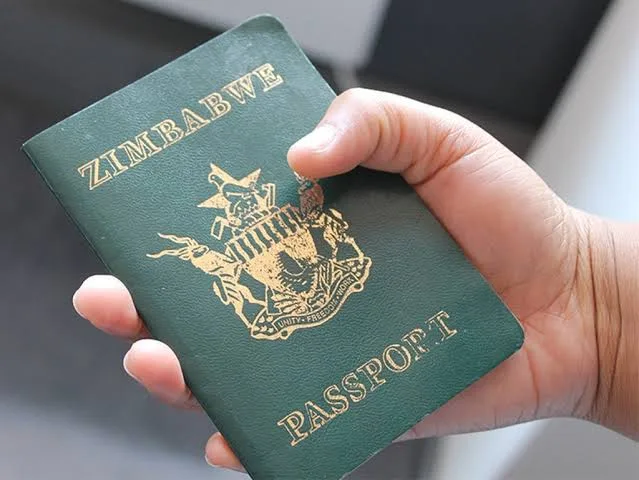
In a policy brief, the commission said an ordinary passport costs $170 and an emergency passport $270, payable in “foreign currency only with no option for applicants to pay using local currency.”
It said high passport costs had become “an impediment to freedom of movement and access to economic opportunities outside the country.”
The commission said the payment requirement disadvantages civil servants and farmers who receive income in both ZiG and U.S. dollars, despite Zimbabwe operating a multicurrency system.
It noted that retailers, service providers and other government departments accept both currencies, while passport applicants must secure foreign currency.
The commission argued that rejecting ZiG payments conflicts with Section 6 of Statutory Instrument 60 of 2024 and Section 25 of the Finance Act, 2024, citing provisions recognising the local currency as legal tender “in all transactions.”
The government has previously defended the payment arrangement, citing contractual obligations under its partnership with the private investor providing the e-passport system.
In May 2024, Deputy Finance Minister Kudakwashe Mnangagwa told Parliament that "foreign-currency pricing formed part of that agreement and changes required consultation with the relevant stakeholders."
Beyond accepting ZiG, the commission wants passport fees reduced to “affordable levels comparable to other countries in the SADC region.”
Its comparison of eight other Southern African Development Community countries put the average cost of an ordinary 32-page passport at $17.39.
Zimbabwe’s $170 ordinary passport costs nearly 10 times that average, although its booklet has 48 pages.
For comparable 48-page passports, the brief listed prices of $18.21 in Zambia, $16.10 in Eswatini and $74.98 in Malawi.
The Zimbabwean charges comprise base fees of $150 for an ordinary passport and $250 for an emergency passport, plus a $20 charge for a quick response code on each electronically readable passport application, under regulations gazetted in January 2024.
The commission acknowledged improvements in passport services through decentralisation, digitisation and the introduction of e-passports, saying ordinary applications are processed within seven working days.
But it said, “This efficiency has come at a price that most Zimbabweans cannot afford.”