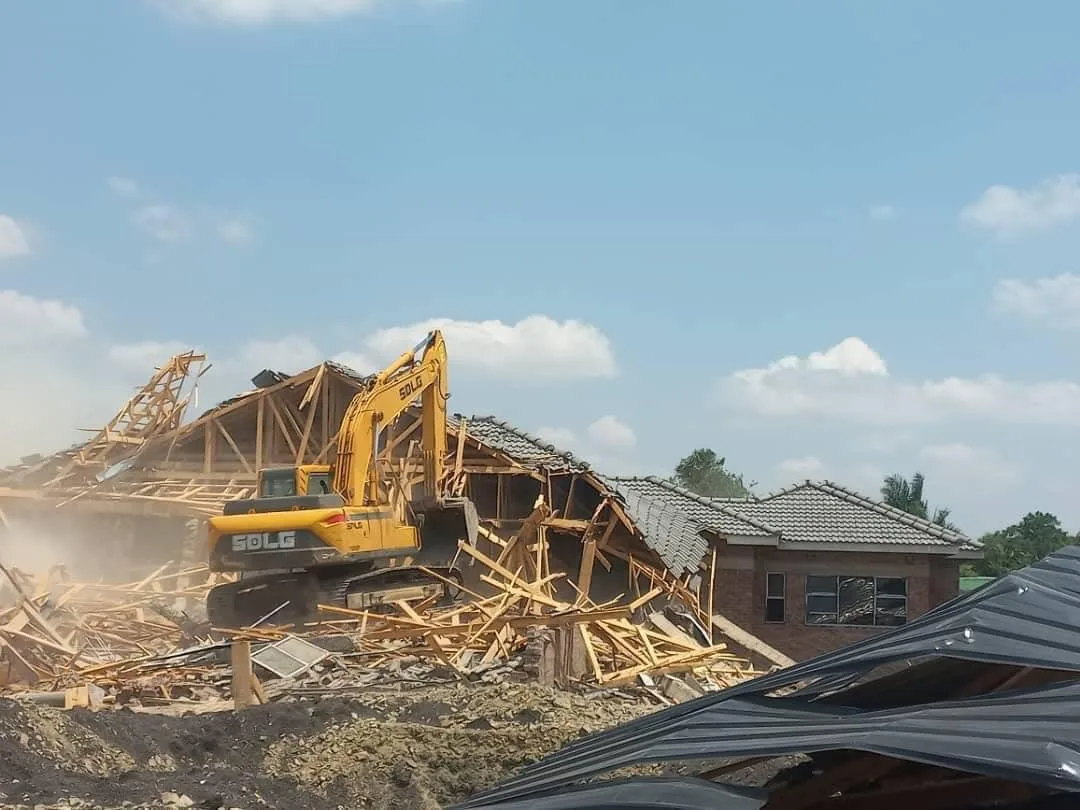
The Crisis in Zimbabwe Coalition is consulting lawyers over possible compensation claims for families whose homes authorities demolished before the government suspended the exercise nationwide.
Local Government and Public Works Minister Daniel Garwe’s directive ordering all 92 local authorities to suspend demolitions and prioritise negotiations has renewed questions about the fate of families whose houses have already been destroyed.
“We are still consulting our lawyers on whether this is a possibility or not,” coalition spokesperson Marvelous Khumalo said.
While the suspension offers relief to households facing demolition, residents’ organisations are demanding accountability for the financial and social losses of families who have already lost their homes.
Khumalo said some demolished houses represented lifetime savings and investments intended to benefit future generations, but policy negligence and inconsistency had shattered those hopes.
He said those responsible should be held accountable and made to compensate affected families.
“This is a disturbing trend which points to policy inconsistency and fluctuation. Why is it that a minister can appear today indicating left, then in a matter of days or weeks, the same minister reappears indicating right?
Such flip-flopping and contradiction from the executive arm of government is a cause for concern,” he said.
Harare Residents Trust spokesperson Fambai Ngirande agreed that affected residents could seek recourse through the courts, although he said it remained unclear who should bear responsibility for the demolitions.
“The constitution does protect the rights to housing and freedom against eviction but we have been here before with Operation Murambatsvina. We do not hear of any compensation scheme, not all of the houses committed under Operation Hlalani Kuhle were ever constructed. Before demolitions the State must first provide alternative solutions for affected people especially children,” he said.
Harare Mayor Jacob Mafume, who also heads the Urban Councils Association of Zimbabwe, acknowledged that councils could face compensation claims where residents proved that demolitions were unlawful.
“For as long as the particular individual can prove that the action taken was unlawful and in violation of the law, then you compensate. Where you have wronged an individual or a group of individuals, you are liable to compensate,” he told a press conference in Harare on Tuesday.
Garwe’s directive covers all 32 urban councils and 60 rural district councils, which must give affected parties an opportunity to negotiate solutions, including possible regularisation of properties.
Meanwhile, Harare has extended the first phase of its property regularisation exercise from Nov. 17 to Dec. 31 following representations from residents’ associations and other stakeholders.
Acting town clerk Warren Chiwawa said council wanted to give genuine beneficiaries a fair opportunity to comply, following an overwhelming response to the exercise.
He said council had captured thousands of properties, opened accounts and conducted development compliance assessments during the first phase.
The second phase would focus on water, sewer systems and roads, alongside measures to secure land tenure and eliminate multiple allocations and land baronism.
“Every regularized stand will have a clear council recognized tenure instrument,” Chiwawa said.
The Zimbabwe Human Rights Commission, in a Nov. 5 statement, acknowledged the responsibility of government and councils to enforce the law but warned that demolitions had consequences beyond the destruction of buildings.
“Behind every affected household are individuals and families whose aspirations for secure shelter and a dignified existence may have been compromised. The loss of a home can occasion profound emotional distress, financial hardship and social dislocation, with particularly difficult consequences for children, older persons and other vulnerable members of society,” the commission said.
Ngirande welcomed the halt but urged council to address the shortage of affordable housing and account for the land and stands it had earmarked for social housing.
“That said, we still have a full blown housing crisis on our hands and irregular settlements are a sign of housing hunger. The solution is for Council to commit more resources towards social housing - it was done in the past and it can still be done,” he said.
He also called for investment in water, health services, roads and other community infrastructure, saying residents expected long-term planning and meaningful returns from their rates and levies.
“The only area requiring an Operation today is that of corruption and the land baron system that is making it harder and harder for Council to build social houses or for people to access cheaper stands on regularized and well serviced Council stands,” he said.
For affected families, the central question is whether authorities will pursue negotiations and regularisation for households whose homes remain standing while leaving those whose properties have already been demolished without a remedy.