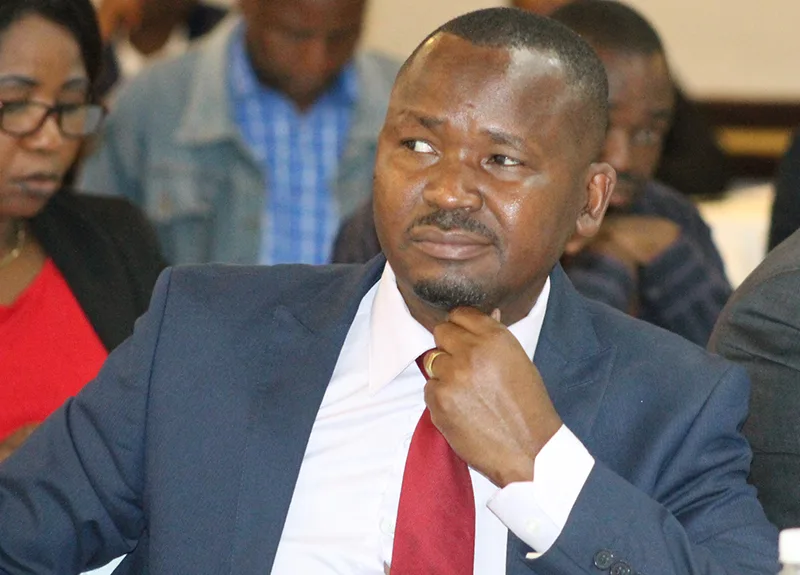
Former Binga North legislator Prince Dubeko Sibanda has told Zimbabweans to prepare for elections in 2028, declaring that constitutional amendments extending President Emmerson Mnangagwa’s stay in power to 2030 cannot withstand legal scrutiny.
Sibanda, who is challenging the extension in court, said the passage of the amendments had not closed the electoral contest, insisting that constitutional restrictions on incumbents benefiting from changes to term limits stood in Mnangagwa’s way.
“Zimbabwe has to prepare for elections in 2028. This 2030 nonsense cannot stand. It’s not sustainable,” he said.
Speaking in an interview with Costa Nkomo on Citizens Voices Network, Sibanda accused Mnangagwa of seeking to prolong his presidency without obtaining a fresh mandate from Zimbabweans.
“Mnangagwa cannot impose his will on 15 million people without seeking their indulgence. If he feels he wants to be president, let him come to the people and ask them through a referendum.”
Mnangagwa signed the Constitution of Zimbabwe Amendment (No. 3) Act into law on July 7, extending presidential and parliamentary terms from five to seven years and applying the changes to serving officeholders.
For Sibanda, however, parliamentary approval and presidential assent do not resolve the constitutional question of whether Mnangagwa can benefit from the extension.
At the centre of his argument is Section 328(7), which bars amendments to term-limit provisions from extending the tenure of anyone who occupied the affected office before the changes.
Sibanda cited Justice Bharat Patel’s reasoning in the 2021 Mupungu judgment, arguing that it supports his contention that the longer presidential term cannot apply to Mnangagwa.
That judgment distinguished judicial retirement ages from fixed terms of office and specifically identified the presidential term under Section 95(2) as a term-limit provision. The dispute concerned judicial tenure rather than the current presidential extension.
The new amendment expressly seeks to apply the longer terms to the sitting president and Parliament despite Section 328(7), setting up the constitutional dispute Sibanda wants the court to resolve.
The legislation cites stability and continuity in national development programmes as justification for the changes.
Sibanda expressed confidence that the Constitutional Court would rule in his favour, describing the dispute as well within the apex court’s capacity.
“It is not a small court. It’s the apex court, and this case is not a big one,” he said.
The interview also brought into focus the political interests surrounding the challenge, with Sibanda responding to allegations that he was litigating from Vice President Constantino Chiwenga’s corner.
“What you are saying is I can’t litigate because you want me to support Mnangagwa. The moment you accuse me of assisting Chiwenga, you are implying that I should support Mnangagwa. I will not do that,” he said.
Sibanda left the door open to cooperation with Chiwenga, saying a shared commitment to defending the Constitution could bring them together.
“If Chiwenga is fighting for constitutionalism in ZANU PF and the country, arguing that mutilating the constitution is not good, then we are fighting the same battle. So why can’t we work together?”