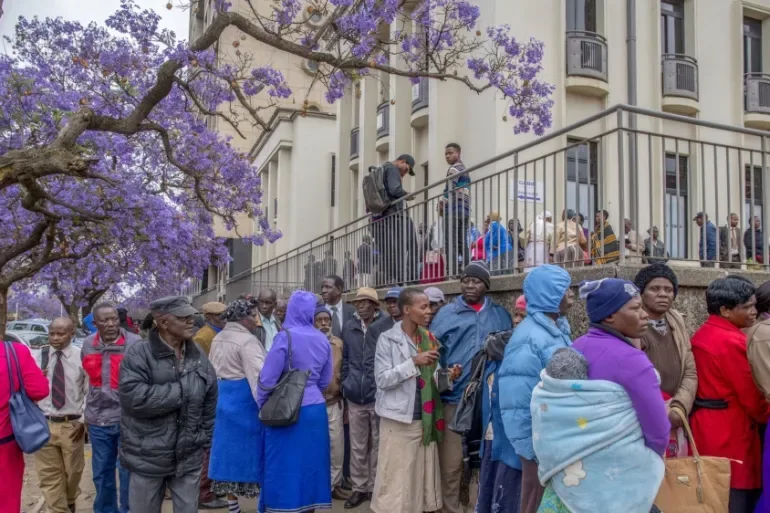
Pensioners have dismissed the National Social Security Authority’s US$20 increase in its minimum monthly retirement pension as inadequate, saying the revised US$90 payout still leaves them struggling to buy food, pay rent and support their families.
The 28.57% adjustment, announced on Nov. 10, was backdated to October and scheduled for the Nov. 13 payroll.
For former civil servant Sarah James, the increase offers little comfort.
“They call it a pension, but to me it is a pittance. NSSA gives us peanuts while the price of mealie-meal and rent climbs every month. How can they expect a grandmother to survive on this?” James said.
Peter Mpofu, a retired worker from a clothing company that once operated in Harare, questioned how decades of work had left him struggling to feed his grandchildren.
“I worked for forty years, and now I sit with my NSSA slip and wonder how I will feed my grandchildren. The money they give us vanishes before the month begins,” Mpofu said.
Their complaints put the adequacy of retirement benefits under scrutiny, particularly for pensioners whose payouts must stretch beyond their own needs.
The Zimbabwe National Statistics Agency placed October’s total consumption poverty line, which covers basic food and non-food needs, at ZWG1,354.65 per person. That translates to approximately US$51 using the Reserve Bank of Zimbabwe’s Nov. 18 average exchange rate.
For five people, the same benchmark works out at about US$255 a month. While the US$90 minimum exceeds the individual poverty line, it would cover little more than a third of that amount for a five-person household relying entirely on the pension.
Former opposition parliamentarian Fadzayi Mahere also criticised the increase, describing it as a slap in the face for workers who had spent their productive years contributing to the fund.
“This is a slap in the face to people who spent their whole lives working and making mandatory contributions to their pensions. $90 can't even buy a tank of diesel or buy groceries. How do they expect pensioners to survive? The same people will demolish their homes. It's a mess,” Mahere said.
The government has presented the adjustment as a step towards strengthening social protection, saying it followed an actuarial valuation that confirmed the fund’s financial health.
NSSA general manager Charles Shava attributed the authority’s capacity to increase benefits to economic stability and stronger investment returns.
He said NSSA’s balance sheet had grown from about US$300 million in 2022 to almost US$1.3 billion, while investment income had risen from US$4 million to US$40 million.