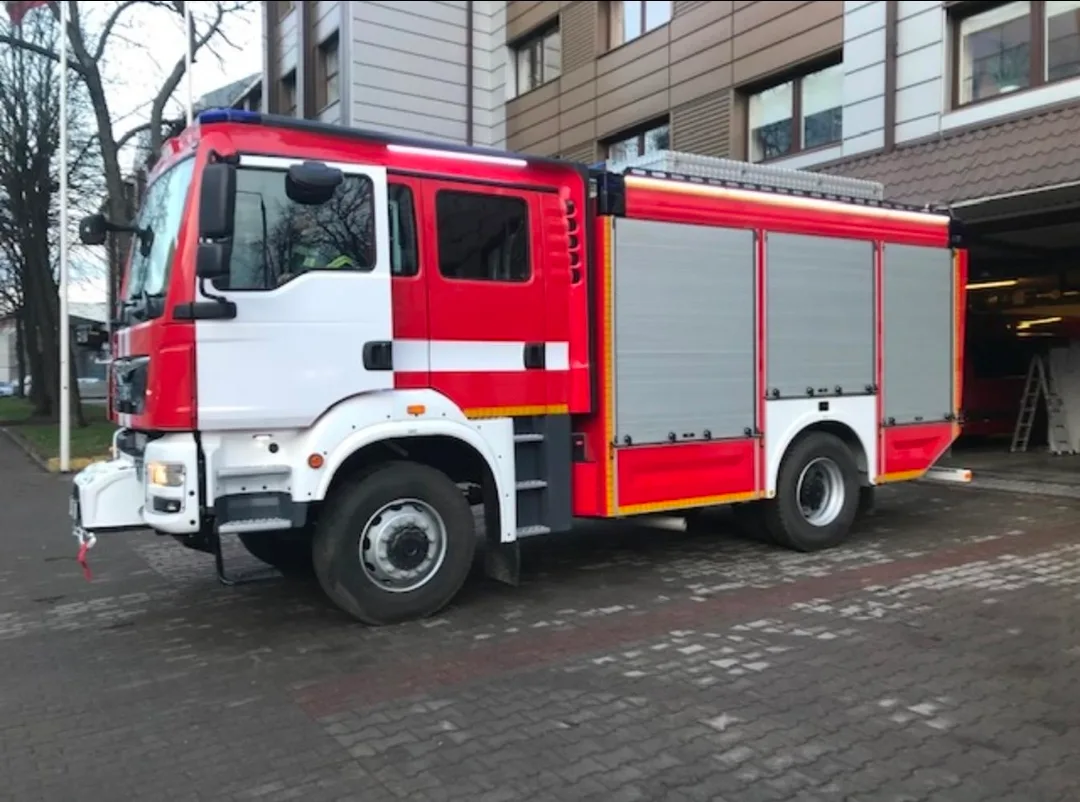
ZIMBABWE is exploring avenues for compensation after losing a legal battle to recover 17 Belarusian fire engines seized and subsequently disposed of in Lithuania over international sanctions.
The fire engines are among 37 vehicles that the Ministry of Local Government and Public Works reported as undelivered under three procurement contracts, according to the Parliamentary Budget Office’s (PBO) analysis of the ministry’s 2026 first-quarter report.
The trucks were impounded in Lithuania following the imposition of sanctions on a component supplier linked to the Belarusian manufacturer, prompting Zimbabwe to challenge their seizure and intended disposal through Lithuanian courts.
“Government has exhausted local remedies in Lithuania and is pursuing advice on compensation claims, international legal remedies, and contractual enforcement against the supplier,” the PBO noted.
Zimbabwe’s appeals went as far as the highest available national legal remedies in Lithuania but were unsuccessful, resulting in the disposal of the trucks.
While the remainder of the fire engine consignment was successfully delivered through alternative routes, the matter remains under legal and diplomatic consideration.
The PBO report does not disclose the value of the 17 fire engines or the amount government intends to recover through compensation claims.
The Belarusian consignment is not the only vehicle procurement deal over which the ministry is seeking legal recourse.
Six years after awarding Earlgrey Motors a contract to supply 27 vehicles, the ministry is still awaiting delivery of 17, with currency depreciation having weakened the financial safeguards put in place to protect public funds.
Payment was made in local currency in 2020 at a time when the country was grappling with significant inflation, exchange rate volatility and foreign currency shortages.
“The supplier depended on the foreign currency auction system, where allocations were limited and not guaranteed, resulting in purported erosion of the value of funds held.
“Although a bank guarantee had been obtained, currency depreciation reduced its effectiveness as a recovery mechanism. Seventeen vehicles remain outstanding,” the report reads.
The ministry has since referred the matter to the Attorney-General for legal recovery and applied to the Procurement Regulatory Authority of Zimbabwe (PRAZ) for the debarment of Earlgrey Motors.
Similar economic constraints frustrated another contract awarded to Sino Truck Zimbabwe in 2020 for the supply of 33 vehicles.
The ministry is seeking legal advice on a possible set-off arrangement involving US$1,196,270 it owes a company affiliated with the supplier for vehicles already delivered.
However, the PBO report gives conflicting figures on the number of vehicles outstanding under the contract, listing three in its subsection heading before putting the figure at two.
“Most vehicles were delivered, leaving only two vehicles outstanding. The Ministry continues to engage the supplier to secure delivery of the balance,” the report notes.
The protracted procurement disputes come against a backdrop of unresolved deficiencies in the ministry’s financial and asset management systems previously flagged by the Auditor-General.
Among these is a US$784,743 payment made directly by Treasury for 13 vehicles, which was not accounted for in the Public Financial Management System and the ministry’s appropriation account.
The ministry has also yet to finalise its risk management policy, a shortcoming the PBO warned could compromise its ability to identify and respond to risks affecting its operations.