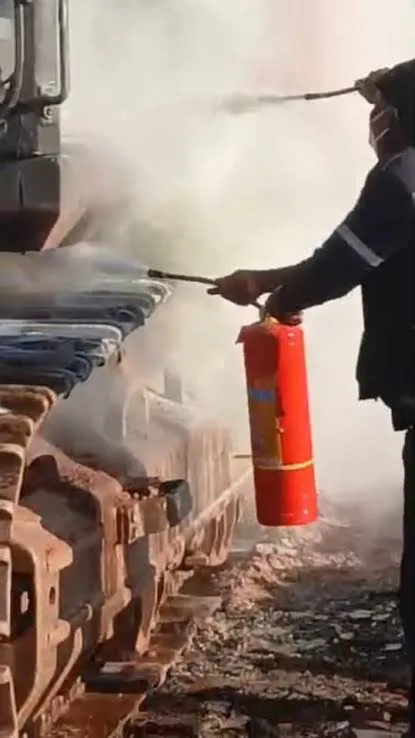
One person died, three others were injured, and five excavators were set ablaze during violent clashes between artisanal miners and security personnel at a gold mine in Shurugwi, prompting a government investigation into the confrontation and disputed mining rights.
The violence broke out Monday night at Wanderer Mine Site Number 4, operated by Chengxi Mine in Zimbabwe's Midlands province, amid reported tensions over access to gold claims.
Zimbabwe Republic Police national spokesperson Commissioner Paul Nyathi confirmed the death and injuries in a statement Tuesday.
Police said they were investigating the violence but did not identify the deceased or those responsible for the destruction.
The Ministry of Mines and Mining Development condemned the clashes in a separate statement dated Nov. 3, saying two security personnel had been hospitalised.
"The Ministry strongly condemns violence, destruction of property and all forms of unlawful conduct in the mining sector," the statement said.
"Mining disputes must be resolved through established legal and administrative channels."
The ministry said it had deployed inspectors to the mine alongside police officers to establish what happened and determine whether the parties involved had complied with mining regulations.
Investigators will also examine the ownership and legality of mining rights in the disputed area, as well as compliance with safety and environmental requirements.
"The Ministry will work with the law enforcement agencies, the mine operator, the artisanal miners and the local leadership," the statement said.
It said authorities would establish the facts and take appropriate action against anyone found to have violated the law.
The confrontation reportedly followed an attempt by mine security personnel to remove artisanal miners from claims operated by Chengxi.
Chengxi Chengetai Investments director Simon Karimanzira alleged that the miners had entered the company's property without authorisation before attacking security personnel and burning mining equipment.
Karimanzira called for a coordinated government response to violence at mining operations, warning that repeated attacks could threaten investment and efforts to formalise artisanal mining.
However, police have yet to establish who initiated the violence or confirm the circumstances surrounding the death.
The latest incident has renewed concerns over disputes involving artisanal miners and established mining companies in Zimbabwe's gold-rich regions.
Such confrontations have frequently centered on access to mineral claims, competing mining interests and disagreements over the legal right to extract gold.
In 2019, Zimbabwe experienced a wave of violent attacks in gold-mining communities involving machete-wielding gangs commonly known as Mashurugwi.
The violence included robberies, assaults and clashes over control of lucrative mining areas.
Research into Zimbabwe's artisanal mining sector has also linked some conflicts to unclear mining rights, unregistered claims and competition over mineral resources.
The government has since pursued measures to formalise artisanal and small-scale mining, strengthen safety standards and improve the management of mining claims.
In 2025, authorities outlined an artisanal and small-scale gold mining strategy to address illegal operations, regulatory weaknesses and poor working conditions.
The government also announced plans in May 2026 to improve mining-title administration through a digital mining cadastre system designed to strengthen the registration and tracking of mineral rights.
The Mines Ministry said: "The protection of lawful mining rights, formalisation of artisanal mining and peaceful coexistence between companies and surrounding communities remained government priorities."