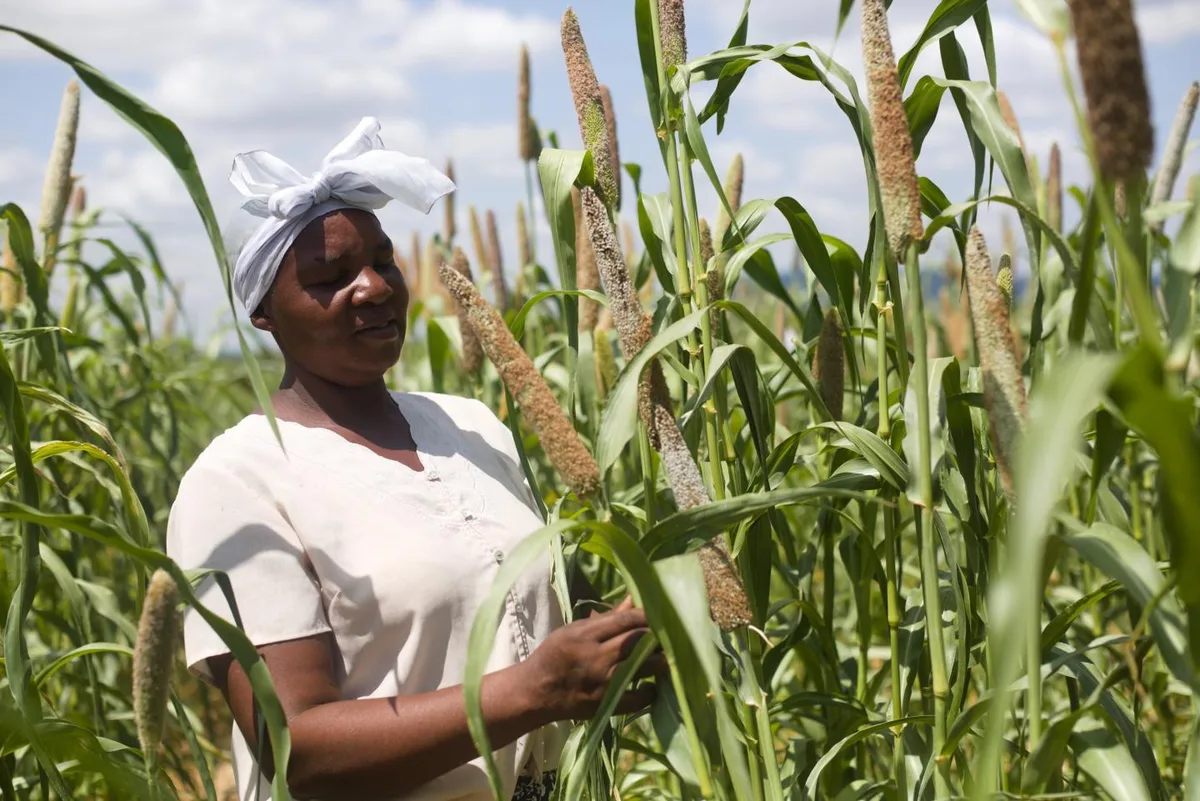
Talent Humanikwa abandoned maize farming after erratic rainfall and rising temperatures made it increasingly difficult to produce reliable harvests.
The farmer from Kawere Village in Ward 4 of Mutoko District, Mashonaland East province, turned to traditional grains and groundnuts to protect her livelihood.
But while the crops offer greater tolerance to dry conditions, they have not solved her biggest problem: access to water.
“Water shortages remain a serious challenge, and our crops are dying because we do not have enough water to sustain them,” Humanikwa says.
Her experience illustrates a growing challenge for Zimbabwe's smallholder farmers as they seek to adapt to climate change while struggling with limited agricultural resources.
In Kawere, women have embraced traditional crops, livestock production and sustainable farming methods to reduce their vulnerability to changing weather patterns.
However, their experiences also expose the limitations of agricultural adaptation efforts that do not adequately address water insecurity.
“I used to grow maize, but it did not do well because of the harsh weather conditions. A 20-kilogram bucket of maize would sell for about US$8,” Humanikwa says.
She now grows finger millet, also known as rapoko or rukweza, alongside groundnuts.
The Zimbabwe Smallholder Organic Farmers Forum (ZIMSOFF) has trained Humanikwa and other farmers to adopt traditional crops and sustainable agricultural practices.
The initiative seeks to strengthen food security, diversify household incomes and help rural communities respond to climate-related challenges.
For Humanikwa, the transition has created opportunities to earn more from crops that can withstand dry conditions better than maize.
Prices reported in Kawere put a bucket of unprocessed finger millet at about US$40, while processed grain can fetch up to US$70.
However, these figures do not establish how much more profitable finger millet is than maize because the quantities, production costs, yields and processing expenses are not directly comparable.
Nevertheless, the figures suggest that traditional grains offer farmers an opportunity to diversify their incomes while reducing dependence on maize.
“These crops are nutritious and well suited to hot, dry conditions,” Humanikwa says.
Yet the ability of these crops to withstand limited rainfall does not make them immune to severe drought.
Climate forecasts raise concerns
The women's concerns come as Zimbabwe prepares for another potentially difficult agricultural season.
The Meteorological Services Department's 2026/27 seasonal outlook projects an increased likelihood of below-normal rainfall across the country under the influence of El Niño.
The department forecasts an erratic start to the rainy season, with much of Zimbabwe expected to receive below-normal rainfall between October and December 2026.
Drier conditions could persist into early 2027, particularly across northern and eastern parts of the country.
The forecast presents additional risks for rain-fed farmers who depend on seasonal rainfall to sustain crop and livestock production.
The 2023/24 El Niño-related drought severely affected agriculture across Southern Africa, demonstrating how rainfall shortages can disrupt rural livelihoods.
Research conducted in semi-arid parts of Mutoko has also highlighted the difficulties of farming under conditions of limited and variable rainfall.
A study published in the journal Experimental Agriculture examined farming systems in the district's agroecological Region IV, where annual rainfall generally ranges from 450 to 650 millimeters.
The research examined how differences in seasonal rainfall influence the performance of maize-legume intercropping systems.
Although the findings do not measure conditions specifically in Kawere, they provide scientific context for the challenges facing rain-dependent farming communities in the district.
For 33-year-old Shylet Macherenje, another Kawere farmer, the threat of prolonged dry spells extends beyond agricultural production.
“Prolonged dry spells can damage crops and reduce harvests, threatening household food security and farmers’ incomes,” she says.
Reduced harvests can leave households with less food for consumption and fewer agricultural products to sell.
This creates additional economic pressure because farmers may need to purchase food at a time when their own agricultural incomes have declined.
Macherenje believes that access to essential agricultural resources could help farmers protect their livelihoods.
“Better access to water, suitable seeds, agricultural training and other forms of support would help us sustain production and protect our livelihoods,” she says.
Government policy meets rural realities
The challenges facing Kawere's farmers come as Zimbabwe implements its National Development Strategy 2, which covers the period from 2026 to 2030.
The strategy identifies agricultural productivity, food and nutrition security, sustainable irrigation and climate resilience among the country's development priorities.
It also calls for integrated land and water management to strengthen agricultural production.
These commitments recognise that improving farming practices alone cannot guarantee food security without supporting infrastructure and access to essential resources.
The government has also adopted a six-pillar El Niño mitigation plan for the 2026/27 agricultural season.
The plan includes measures to strengthen national grain reserves, accelerate climate-smart agricultural production, improve financing, protect livestock and enhance early-warning systems.
During an October 2026 Cabinet briefing, the government reported that it had identified more than 112,000 hectares for maize irrigation nationwide.
However, the national figure does not establish whether farmers in Kawere will benefit from additional irrigation infrastructure.
“Their experiences highlight a central challenge for agricultural policy: translating national adaptation priorities into practical interventions that reach vulnerable farming communities,” said analyst Jethro Makumbe.
Training farmers to adopt drought-tolerant crops can reduce their exposure to climate risks, but dependable water supplies remain essential for sustained production.
For communities such as Kawere, effective adaptation therefore involves more than changing crop varieties.
It also requires attention to water infrastructure, agricultural financing, extension services and access to markets.
Diversification offers another lifeline
While Humanikwa and Macherenje have embraced traditional grains, other women in Kawere are combining different agricultural activities to spread their risks.
Among them is 27-year-old Marvelous Chimana, who practices horticulture alongside livestock farming.
She keeps pigs, chickens, turkeys and cattle, using poultry manure to improve soil fertility and reduce dependence on purchased fertilisers.
Her approach offers an alternative to relying entirely on seasonal crop production.
“Livestock is an important source of food and income for our households. By diversifying our farming activities, we can reduce our dependence on a single source of livelihood and become more resilient when climate-related challenges affect crop production,” Chimana says.
Diversification can help households manage agricultural uncertainty because difficulties in one activity do not necessarily eliminate every source of food or income.
However, livestock farming also faces climate-related risks, including reduced pasture and drinking water during prolonged droughts.
The Famine Early Warning Systems Network warned in September 2026 that expected rainfall deficits could limit pasture and water regeneration, increasing risks to livestock production.
For farmers such as Chimana, this means that combining livestock and crop production may reduce some risks without eliminating their dependence on rainfall and water availability.
“Combining horticulture, livestock and traditional grain production helps us make better use of the resources available to us. It also strengthens our ability to provide food for our families, even when one farming activity faces difficulties,” Chimana says.
Farmers seek greater control over resources
Beyond promoting agricultural diversification, ZIMSOFF has introduced farmers to income-generating activities, including fish farming, while providing training in water management, soil conservation and agroecology.
The initiative also incorporates Public Expenditure Tracking Surveys, which equip communities with skills to examine how public resources are allocated and spent.
Such training can help farmers scrutinize spending priorities and monitor investments in agricultural infrastructure, including irrigation, rural roads, storage facilities and markets.
It can also strengthen their ability to engage policymakers on decisions affecting agricultural development.
This introduces a public accountability dimension to climate adaptation.
Farmers who understand how authorities allocate development resources may be better positioned to identify their communities' priorities and advocate for appropriate support.
However, the training itself does not establish whether public funds have reached Kawere or whether any specific agricultural investment has failed.
Establishing those outcomes would require examining budget allocations, project records and implementation reports.
Zimbabwe's National Development Strategy 2 also identifies transparency, accountability and stronger monitoring systems among the mechanisms needed to achieve its development objectives.
For farmers facing recurring droughts, the practical value of such commitments will depend on whether public investment improves the resources and services available to their communities.
Preserving traditional knowledge
Women in Kawere are also helping preserve and share traditional seeds, maintaining agricultural knowledge passed down through generations.
This role has gained significance as communities explore indigenous crops that may offer greater resilience under difficult climatic conditions.
Messages displayed on banners associated with ZIMSOFF and the Alliance for Food Sovereignty in Africa reinforce the importance of women's involvement in seed preservation.
One reads, “Women: Africa’s Seed Custodians,” while another declares, “Seed Is Life.”
The preservation of indigenous seeds complements wider efforts to promote food sovereignty, agricultural biodiversity and locally appropriate farming methods.
However, traditional knowledge and improved farming practices cannot independently resolve the infrastructure and resource challenges facing smallholder farmers.
For Humanikwa and other women in Kawere, the immediate priority remains securing enough water to keep their crops alive.
Their efforts demonstrate how rural households are responding to climate uncertainty through crop diversification, livestock production and sustainable agricultural practices.
But the approaching rainfall season will test the limits of those strategies.
As Zimbabwe pursues its climate adaptation and agricultural development commitments, the experiences of Kawere's women underline the importance of connecting national policy with the practical needs of farming communities.
For Humanikwa, the decision to abandon maize was one step toward building a more resilient livelihood.
Whether her traditional grains deliver lasting food security will depend not only on the crops she grows, but also on the water available to sustain them.