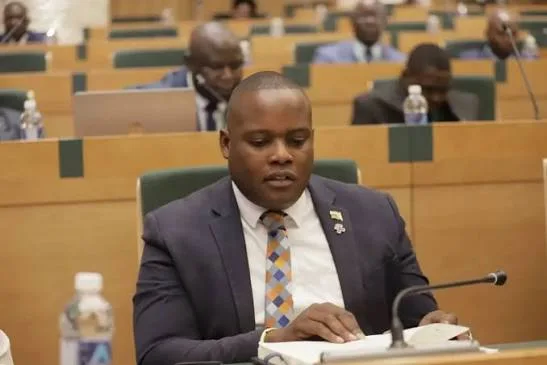
Struggling Zimbabweans should expect little relief from the 2027 National Budget, opposition MP Caston Matewu said Thursday, arguing that the country’s economic growth has mainly benefited the wealthy.
His criticism followed Finance Minister Mthuli Ncube’s budget speech in Parliament, in which he projected a US$66 billion economy this year and growth of 3.5% in 2027.
“If you were suffering, if you had no money, expect the same. If you were rich, then it means you can probably continue to get richer and richer,” Matewu said.
Ncube said Zimbabwe’s economy grew by 8.3% in 2025, the fastest rate in the Southern African Development Community. He projected further growth of 5% this year before a slowdown in 2027, largely because of drought risks.
He said the economy had expanded by a cumulative 33.6% since the COVID-19 pandemic. Gross national income per person now stood at about US$4,100, he said, placing Zimbabwe seventh in Africa by that measure.
Matewu, the Citizens Coalition for Change legislator for Marondera Central, said those figures had yet to translate into better public services or a narrower wealth gap.
“The growth is not being felt by the person on the ground. So it's all academic, it's all numbers, it's all figures, but the actual growth must be seen in schools being built. It must be seen in equality being reached,” he said.
He also questioned ministry funding, claiming: “Most of the ministries have got 50% less than the money that they were given in the previous budget.”
Matewu did not identify the ministries behind that claim. Treasury’s published figures show that education and health, two of the largest allocations, both increased in nominal ZiG terms from 2026 to 2027. zimtreasury.co.zw
For Matewu, the dispute goes beyond the size of the budget. He said the gains from growth were reaching people who were already well off while the poor remained trapped in hardship.
“What we have in Zimbabwe is inequality. Those who are rich are very rich, those who are poor are very poor. So the gap between the rich and the poor has grown astronomically,” he said.
Business & Economy · Zimbabwe
Matewu sees little relief for struggling Zimbabweans in 2027 budget
Matewu sees little relief for struggling Zimbabweans in 2027 budget