The grief that followed Soul Jah Love’s death on February 16, 2021, soon became too large for a family home.
Four days later, thousands thronged Warren Hills Cemetery in Harare.
His songs played from cars as mourners chanted his name, bidding farewell to Soul Muzavazi Musaka, 31, whose music had given hardship a fiercely defiant voice.
For many supporters, Chibaba seemed irreplaceable.
Later, chanters borrowed his delivery, dress and mannerisms; one even performed as Chipoko ChaSauro (Soul Jah Love’s ghost).
Familiarity attracted attention, but some struggled to sustain it.
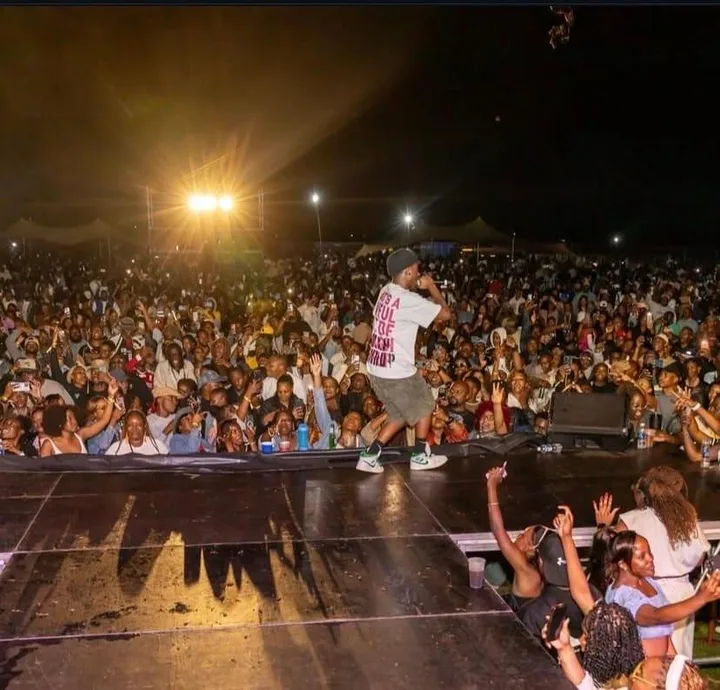
Now Hulengende, born Ezbornwage Chidamajaya, has reopened the succession debate with songs including “Nhepfu Tepfu” and “Zunza Mupunduru”.
Kworb’s YouTube Zimbabwe chart for the week ending Oct. 29 placed those songs and “Kukwadabuka” among the top five.
His Tsvimbo Mutauro launch also drew a capacity crowd to Chitungwiza Aquatic Complex.
That gives his rise substance.
Whether those listeners will stay is another question.
Zimdancehall enthusiast Sheila Mutize expects more than a brief reign.
“My view is likely going to be an unpopular one, but I feel Hulengende will go far, even surpass Jah Love,” she said.
Mutize also sees Malloti, who features on Hulengende’s “Party Time”, as an important source of support.
“In Malloti, he has found a real cheerleader and someone who can support and push him to reach greater heights,” she added.
Arnold Chigarirano, a Soul Jah Love loyalist from Granary in Harare, hears too much of Musaka in Hulengende’s delivery.
“The standard that Soul Jah Love set is very high. No one among the young artists can replicate it,” he said.
Producer Bezeleel Mhako points to broader influences, including Killer T and Winky D.
“Hulengende is not becoming anyone. Neither is he following in anyone’s footsteps. He is his own person, building his own name and brand,” Mhako said.
Musaka built his following through songs about love and poverty, with “Ndini Uya Uya” "dai hupenyu hwaitengwa" and “Gum-kum” ("kuponda nhamo" among others, helping establish him.
For music analyst Peter Tinashe Kaviya, however, the succession debate overlooks what Musaka became.
“Soul Jah Love managed to transform himself from being a music artist to being a cultural icon,” he said.
Kaviya points to expressions such as “chibaba" "Makuruwani”, mafudan'a, "chigunduru" and “hauite”, which travelled from Musaka’s performances into everyday speech.
“We speak about Soul Jah Love. We speak like Soul Jah Love. We use his words,” he said.
Scholar Shingi Mavima’s 2023 chapter in The Zimdancehall Revolution offers evidence of that reach, tracing “Pamamonya Ipapo” into sermons, advertising, political campaigns and street language.
A song acquires a different kind of permanence when people use it to describe their lives, even when the recording is no longer playing.
Kaviya extends the argument to Musaka’s distinctive dreadlocks, dress and carefree public persona.
He sees Hulengende as a student of that cultural influence, borrowing elements of an unapologetic style he suggests might be “organised chaos”.
That creates a demanding inheritance: resemblance can establish a connection, but cannot automatically transfer cultural authority.
Kaviya nevertheless recognises Hulengende’s growing standing.
“What Hulengende has managed to establish is himself as a worthy voice in the pop culture of Zimdancehall,” he said.
In his assessment, leadership within today’s scene and ownership of Musaka’s legacy are different claims. Artists have different talents, and an audience large enough to accommodate them should allow individual careers to develop.
“But we can discuss Hulengende creating his own legacy, gaining his own ground, without really comparing him to anyone else,” Kaviya said.
Music fan Takudzwa Mapisa doubts the current excitement will survive.
“Very soon we will have forgotten this guy. Yes, he is a good musician but today’s music does not last,” he said.
He cites Bob Marley and Leonard Dembo as examples of carefully considered music that endures.
Declaring Hulengende’s failure now, however, is as premature as crowning him.
Music analyst Simbarashe Namusi wants a deeper catalogue and consistent hitmaking before drawing comparisons.
“I think Hulengende has potential, but the comparison has come a bit too early,” he said.
"In terms of discography, Hulengende is a fair bit behind Souljah Love, so I would say let's wait and see if he can produce hit songs consistently beyond "Nhepfu Tepfu".
Only then can we determine his trajectory and compare him with Souljah Love. For now, it's too soon."
By Oct. 29, “Bhura Dhanzi”, featuring Madedido, had recorded 27 weeks on Kworb’s YouTube Zimbabwe chart.
If future fans greet another chanter with “He reminds me of Hulengende”, there will be a different legacy to discuss.