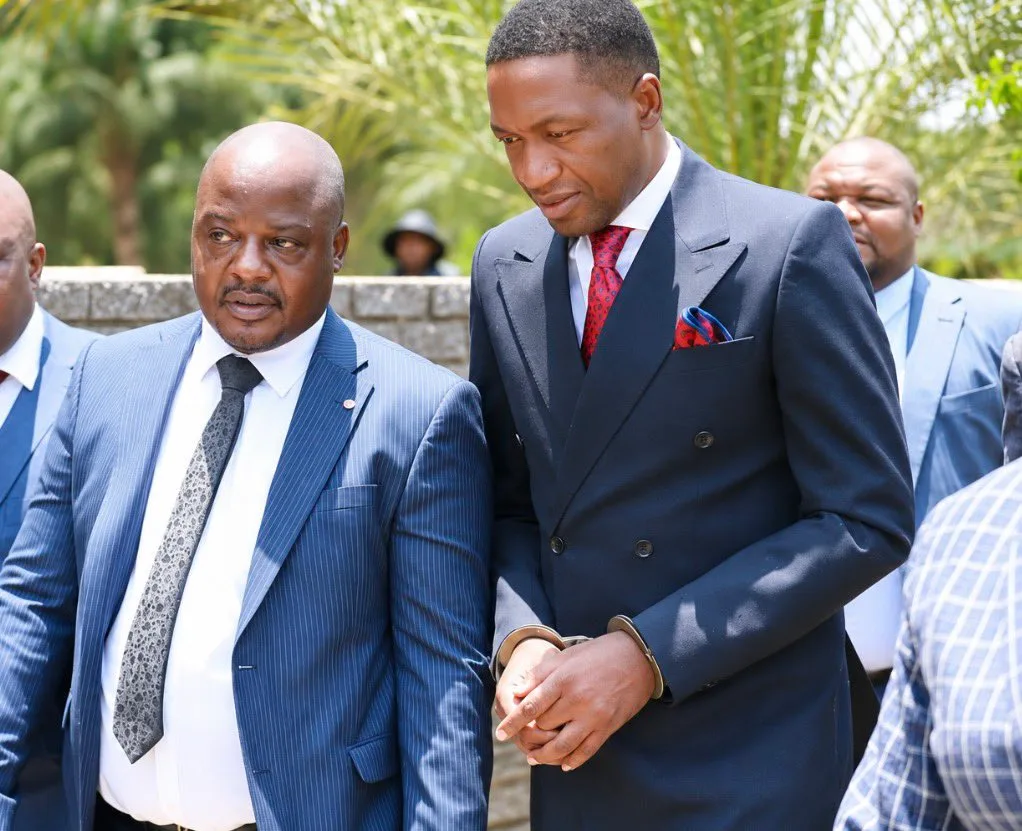
THE dark double-breasted suit, crisp white shirt, red tie and matching pocket square made for an elegant ensemble.
There was, however, one incongruous accessory: a pair of handcuffs.
Uebert Angel walked at a measured pace towards the Harare Magistrates Court, barely acknowledging the commotion around him as journalists jostled for vantage points, some hoisting their cameras above their heads.
“Tokumbirawo kupfuura” (please allow us to pass), implored Superintendent Elizabeth Chipfakacha, the Masvingo-based police officer who had participated in the arrest of another prominent preacher, Walter Magaya, a year earlier.
Angel’s attention was on his lawyer.
“Ndambokumbira vakubvisei ma handcuffs but varamba” (I asked them to remove your handcuffs, but they refused), the lawyer told him.
The preacher nodded, his face betraying little expression.
Three years earlier, Angel had presented her with a yellow Ferrari F8 Tributo.
Such extravagance was hardly an aberration in the Angel household.
The preacher’s largesse has also extended beyond his immediate family, with vehicles and cash among the gifts he has publicly bestowed upon congregants over the years.
In 2013, he reportedly gave a congregant a Range Rover Sport worth more than US$100,000, while five years later, a member of his London congregation received a Mercedes-Benz.
Less than three months ago, late businessman Wicknell Chivayo publicly offered Angel US$250,000 as birthday lunch money and announced the purchase of a brand-new Rolls-Royce Ghost for the preacher’s wife.
These are sums that many Zimbabweans would struggle to accumulate over several lifetimes.
Yet this week, Angel travelled in a vehicle he neither owned nor had the liberty to choose, sharing a compartment with other inmates whose social and economic circumstances may be vastly different from his own.
Its departure time, destination and passengers were determined by prison authorities.
The privileges associated with wealth extend well beyond the acquisition of expensive possessions; perhaps their greatest attraction lies in the considerable latitude they afford individuals in determining how they live.
For someone of Angel’s means, decisions about where to spend the night, what to eat, whom to meet and when to travel ordinarily present few financial impediments.
Incarceration considerably diminishes that latitude.
Even the most mundane aspects of existence, from receiving visitors to communicating with the outside world, become subject to institutional regulations.
Zimbabwe’s prisons, where overcrowding and inadequate facilities have long been matters of concern, constitute an environment considerably removed from the opulence associated with Angel’s public persona.
While the precise conditions under which he is being detained remain unknown, his movements are no longer entirely his to determine.
There is a further dimension to Angel’s circumstances.
His influence has not been confined to ecclesiastical circles, having ventured into the realm of diplomacy following his appointment by President Emmerson Mnangagwa as an ambassador-at-large in 2021.
The appointment added political stature to a personality who had already established a considerable international religious following.
Yet neither his diplomatic standing nor his religious prominence has spared him the indignity that ordinarily accompanies an arrest.
Indeed, four police officers stationed at Highlands Police Station now face criminal abuse of office charges arising from allegations concerning his treatment while in police custody.
Among the issues raised is the allegation that Angel was accommodated in an office rather than being placed in a police cell.
The allegations against the officers remain unproven, but their prosecution has brought into focus the contentious question of whether social standing should determine how individuals are treated in custody.
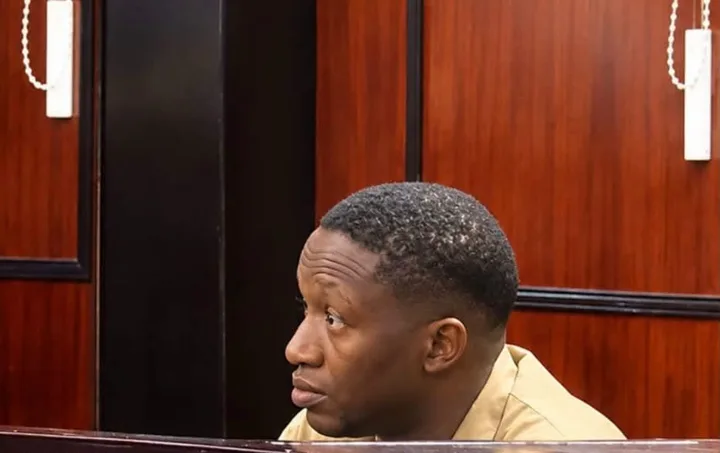
Inside the packed courtroom this week, Angel occasionally conversed with his lawyers from the accused’s dock.
For a man accustomed to occupying the centre of a stage and addressing congregations, the courtroom presented a different arrangement of authority.
Here, it was the magistrate who presided, the prosecution that advanced the State’s case and his lawyers who made representations on his behalf.
Outside, the journalists were waiting.
After court proceedings on Wednesday, Angel covered his head with a black bag as he boarded the prisons truck that would ferry him back to remand prison.
The man whose ministry has extensively employed television and social media to project his image was now shielding his face from the cameras.
Angel’s Ferraris have not necessarily disappeared, his congregation has not dissolved and his business interests have not ceased to exist.
What has temporarily diminished is his freedom to enjoy them.
Sunday will mark a week since his arrest during a church service at the Harare Hippodrome.
While his congregants may assemble for worship, their spiritual leader will spend the day in remand prison.
Whether he returns home on Monday is a decision that rests not with the preacher, his wealthy associates or his followers, but with a magistrate.