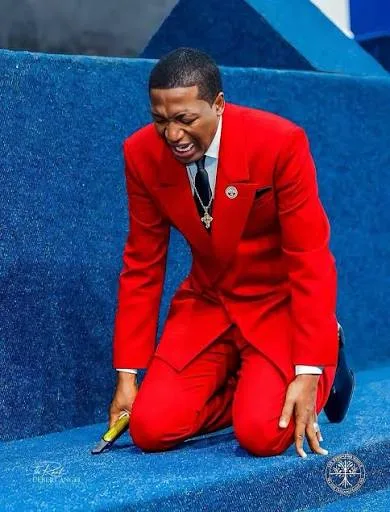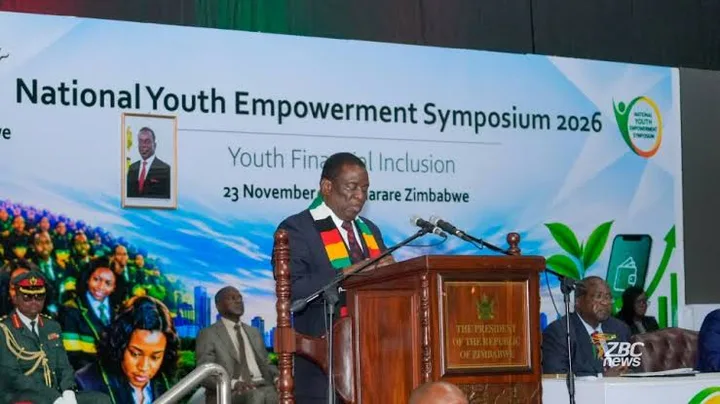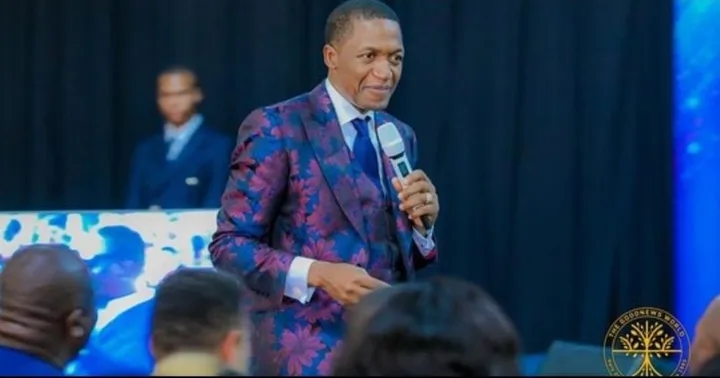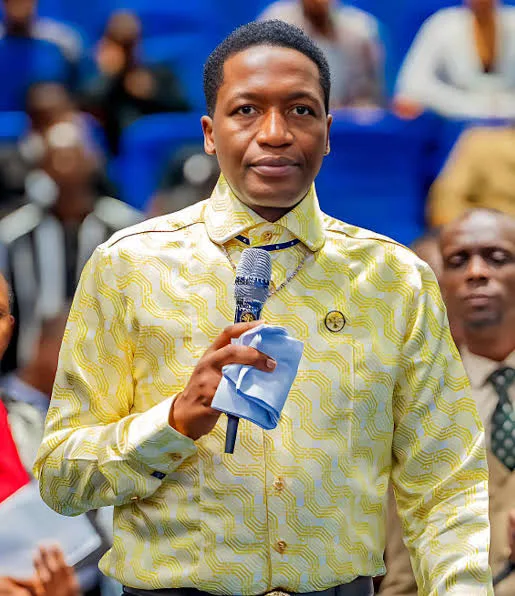
On the first Sunday of November, Uebert Angel stood before his congregation at the Harare Hippodrome and defended the vice-president.
On the fourth Sunday, armed police came to the Hippodrome for Angel.
Hippodrome is Greek for racecourse.
It is as apt a name as any for the place where Zanu-PF's succession is being run, even if nobody has formally entered the race.
In between, on a Tuesday, the prophet felt obliged to tell the nation that he still belonged to the president.
Of the three events, that is the one that says most about where Zimbabwean politics now stands.
Police say they arrested the Spirit Embassy founder on 22 November on allegations of indecent assault and sodomy.
A witness told ZimLive that about ten armed men handcuffed him and led him away mid-service.
The allegations are unproven and untested in court.
The Zimbabwe Republic Police's statement said nothing about a sermon, a vice-president or a quarrel inside Zanu-PF.
It did not need to.
All three had been part of Angel's November long before the police arrived.
Consider what Angel told his congregation on 1 November.
President Emmerson Mnangagwa had chosen to keep Constantino Chiwenga as his deputy.
Surely those who professed respect for the president's judgment could extend a measure of courtesy to the man he had chosen?
Angel allowed that both men were fair game for criticism.
What offended him was the abuse.
"But contempt masquerading as criticism is diabolic. It's evil," he said.
He also waved away talk that Chiwenga is dangerous.
If that were true, he reasoned, his opponents would be dead by now.
It is a curious testimonial: the survival of a man's enemies offered as proof of his gentleness.
There was a perfectly good Sunday sermon in the difference between criticism and cruelty.
The trouble began when Angel supplied the address of the sinner.
In the government organogram, Chiwenga is the president's deputy.
In the succession fight, he is widely seen as the main alternative to whatever arrangement the president's loyalists have in mind.
A kind word for him gets entered in a rival camp's books.
The pulpit has, in any case, become something of a house instrument in this contest.
In April, Chiwenga himself preached on King Hezekiah, who was told he would die, prayed for more time and was granted another 15 years.
Many heard a comment on talk of extending Mnangagwa's own tenure.
Some demanded the vice-president's resignation.
War veterans rose to his defence.
Angel preached on civility and was heard as speaking for Chiwenga.
Nobody in this exchange says quite what he means.
Nobody in the congregation has any trouble hearing it.
Former Norton legislator Temba Mliswa heard a politician at work in Angel's pulpit.
If criticism of Chiwenga was permissible and contempt for him diabolic, Mliswa wanted to know, who decides where one ends and the other begins?
It is a question worth asking.
A politician who dislikes your choice of words can accuse you of bad manners. A prophet can leave you wondering whether you have offended God.
That is a considerable advantage to hand one side of a political argument.
Mliswa, it should be said, is hardly a neutral referee.
He had earlier urged Chiwenga to resign over the Hezekiah sermon.
He answered Angel's with a post titled "The False Prophet Who Became a Praetorian" and called for the preacher's arrest.
That a polemicist demanded an arrest and the police later made one proves nothing about either.
Sequence is not causation. It is, however, the kind of sequence Harare is unlikely to leave alone.
Then came 10 November. "I am a Mnangagwa loyalist, and I have never been shy about saying so," Angel wrote.
He added that he knew of no factions in Zanu-PF and belonged only to the president.
It is an admirable claim, and it demands a rare commitment to not looking.
The statement did not mention the sermon. It answered the question of whom Angel loved, when the question being asked was why he had been so warm towards the vice-president.
Notice, too, that his case for Chiwenga rested entirely on Mnangagwa: respect the president's choice.
It was loyalty to the president, delivered through the vice-president's door.
That it needed clarifying nine days later suggests the delivery was noticed.
In Zanu-PF's present grammar there are only two positions, for the president or for his deputy.
A civil word about one is parsed as a faction in favour of the other.
Courtesy has become a camp.
Angel has himself helped blur the lines between his several offices.
Mnangagwa appointed him ambassador-at-large in March 2021.
Two years later, Al Jazeera's Gold Mafia documentary showed Angel and his lieutenant Rikki Doolan telling undercover reporters, "We are the government."
The film alleged that he offered diplomatic cover to move cash in exchange for gold. Angel's side said the remarks were made to test the supposed investors, in what it described as an intelligence operation. Zimbabwe's Financial Intelligence Unit later cleared him, saying it found no evidence to support the documentary's claims.
Even with those qualifications, it was Angel's own candour that first invited the public to see the prophet and the government in the same frame.
Whatever he meant by it, the sentence has proved hard to unsay.
Sunday's arrest carries a hazard for anyone trying to make sense of all this.
Once every public act is read as a move in the succession contest, even an allegation of sexual misconduct risks becoming a story about the fortunes of powerful men.
Anyone who has made a complaint deserves to be heard on its merits.
Angel deserves the same consideration when he answers it.
Neither is served by a political verdict reached in advance, whether by those who will insist the arrest was the price of a sermon or by those who will insist the sermon has nothing to do with it.
The police must account for the case they pursue.
Zanu-PF has a different question to answer. How did it become so hard to say a civil word about the vice-president without having to explain yourself to the president's supporters?
Whatever comes of the arrest on the fourth Sunday, that was the question Angel left Zimbabwe on the first.