Residents of Imbeza Valley in Mutasa district, Manicaland province, have demanded the suspension of river works they suspect involve gold extraction, warning that the operation threatens their drinking water and agricultural livelihoods.
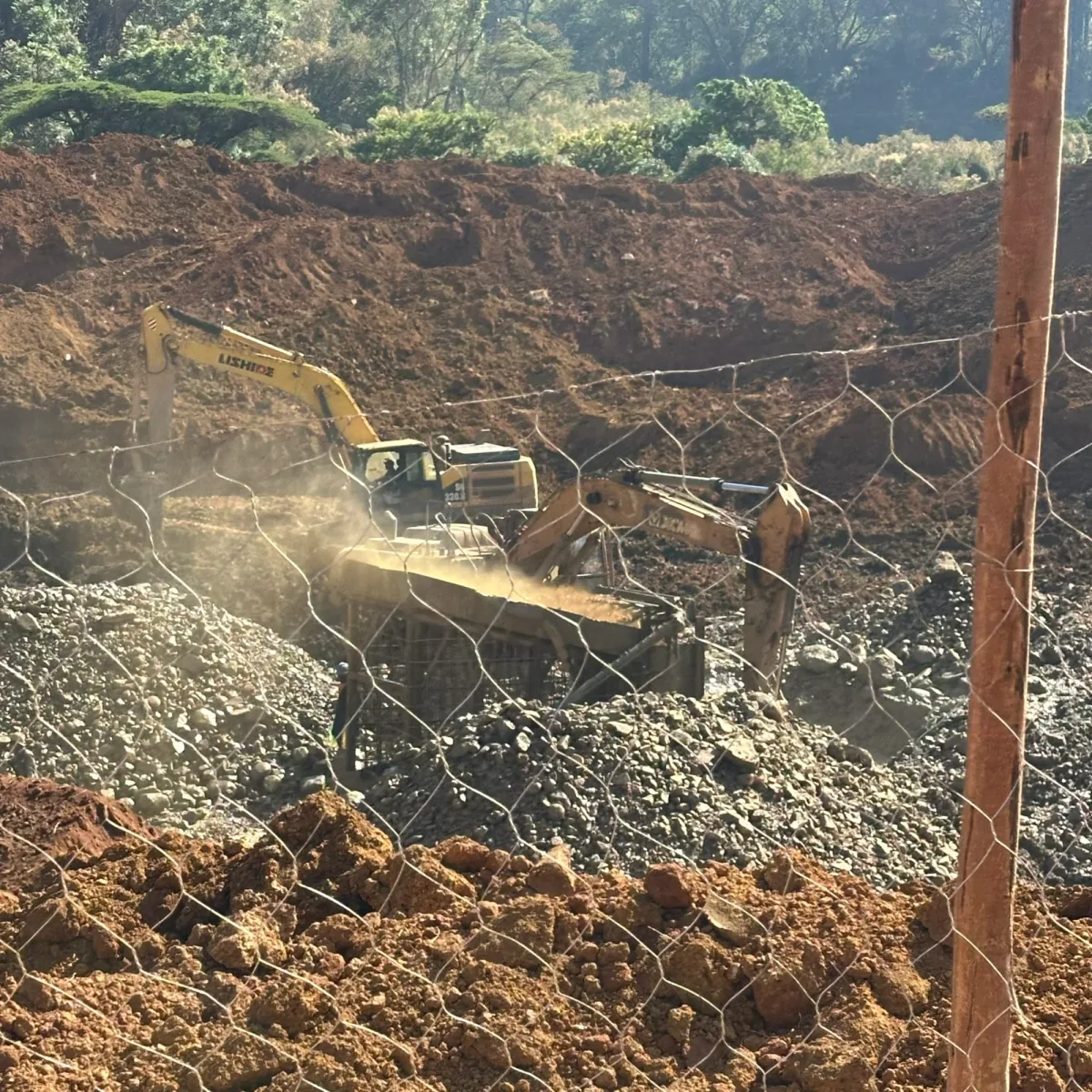
In a petition dated Oct. 23, the Imbeza Valley Residents and Property Owners accuse Batanidza Nexus (Private) Limited of "using a rehabilitation exercise as cover for suspected alluvial mining at the La Rochelle Hotel property."
“Residents have no ZINWA piped-water supply and depend on the river for drinking water, domestic use and agricultural activities,” the petition reads.
Residents say water conditions have deteriorated since operations began, raising concerns about contamination, sedimentation, and whether the water remains suitable for drinking and irrigation.
They point to the construction of slime dams, an apparent mineral-processing plant, and interference with the river’s natural flow as reasons to question the operation’s purpose.
Their petition, dated Oct 27, was addressed to the Agriculture, Mechanisation and Water Resources Development Ministry’s permanent secretary, Professor Obert Jiri, and bears an Environmental Management Agency Manicaland registry stamp.
The residents allege that work presented as environmental restoration has assumed “the characteristics of a gold extraction and mineral-processing operation.”
The allegations of unlawful mining and water contamination have not been independently verified.
The complaint comes against a changing regulatory framework governing Zimbabwe’s damaged waterways.
Statutory Instrument 188 of 2024 prohibits alluvial mining in rivers and public streams.
However, the emergency rehabilitation framework introduced through Statutory Instrument 91 of 2026 allows approved contractors to recover minerals encountered during genuine restoration, subject to authorisation and regulatory conditions.
The framework requires regular upstream and downstream water-quality monitoring and prohibits discharging process water into rivers.
It also bars constructing processing plants, slimes dams or settling ponds within 500 metres of riverbanks or the highest flood level.
The petitioners question the justification for rehabilitation at the disputed site, saying the affected stretch had not, to their knowledge, previously experienced the kind of alluvial mining they now suspect.
Separately, the National Trust of Zimbabwe, which owns La Rochelle estate, has warned about mining encroachment around the property and environmental damage in the surrounding Penhalonga area.
For the petitioners, the concerns extend beyond the river to household water supplies, food production and livelihoods across the valley.
“The potential consequences extend beyond environmental degradation to public health, food security, livelihoods and the value of properties throughout the valley,” they wrote.